




Climate change and health are deeply connected, but communicating those links to the public is not always straightforward. Concepts such as heat stress, disease vectors, climate projections, or health-system emissions can feel abstract and distant from everyday life. Yet if communities are expected to adapt to climate-related health risks, awareness alone is not enough; people need opportunities to engage, interact, and see themselves within the conversation.
Across Europe, MOUNTADAPT demonstration sites are hosting practical experiments in science communication and citizen mobilisation: testing how research can become tangible, understandable, and actionable. These experiments are often called open field days, or public engagement labs.
Two recent examples from Tyrol in Austria, and Selnica ob Dravi in Slovenia illustrate different approaches to the same challenge.
Making climate-health risks personal: Lessons from Tyrol
During Austria’s nationwide Long Night of Research in April 2026, the Tyrol team held an event at the University for Health Sciences, Medical Informatics and Technology (UMIT) Tirol, reaching around 700 visitors through a series of interactive experiences designed around a simple principle: people understand risks better when they can connect them to their own lives.
Instead of presenting climate projections through static information panels, visitors physically experienced exertion through a rowing challenge while discussing questions linked to heat and health: How do we recognise overheating? When should we rest? How do we respond if someone is experiencing heat stress? The experience transformed climate change from a distant environmental issue into an immediate personal question.
Other activities extended the conversation further. Interactive quizzes challenged assumptions about greenhouse gas emissions and highlighted the health sector’s role in contributing to emissions. Children imagined hospitals of the future through drawings that consistently featured green spaces, trees, and areas designed for wellbeing. These ideas reflect important approaches to
sustainable urban and healthcare planning. Green infrastructure plays a crucial role in both climate mitigation and adaptation, providing shade, reducing heat, and creating more comfortable microclimates.
Another activity introduced visitors to the issue of invasive mosquito species and how changing climate conditions may influence their future spread in alpine regions. Through a displayed Vectrack mosquito trap and informative posters, visitors gained insights into current developments. The Surviral team at UMIT demonstrated how these species may spread further under future climate conditions and potentially establish themselves in Tyrol. But it is not too late to act: the tiger mosquito has not yet established itself
locally. Preventing this requires decisive climate action and continuous mosquito monitoring to enable rapid response when needed.
As a token of appreciation for their participation, children and parents received wildflower seeds – a symbolic contribution to promoting biodiversity and environmental awareness, which will hopefully soon be visible in gardens and on balconies across Tyrol.
The key lesson was clear: participation increases when scientific information is linked to experiences people already understand — movement, health, family life, and everyday choices.
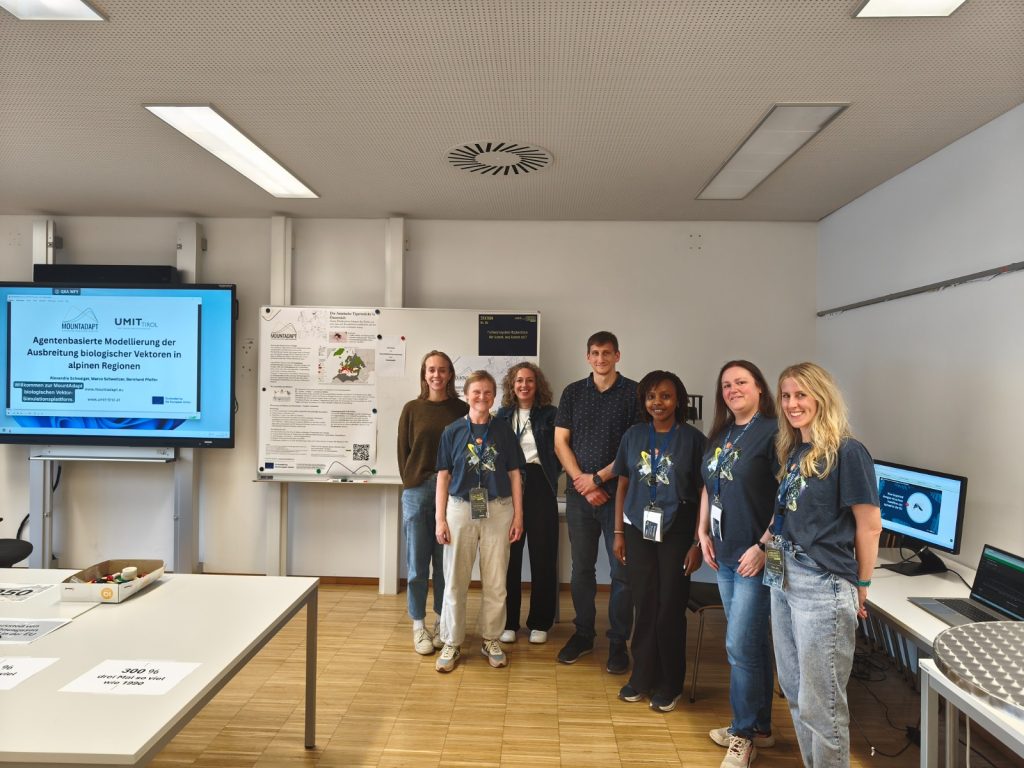
Photo credits: Bernhard Pfeifer, UMIT
Making invisible risks visible: Lessons from Slovenia
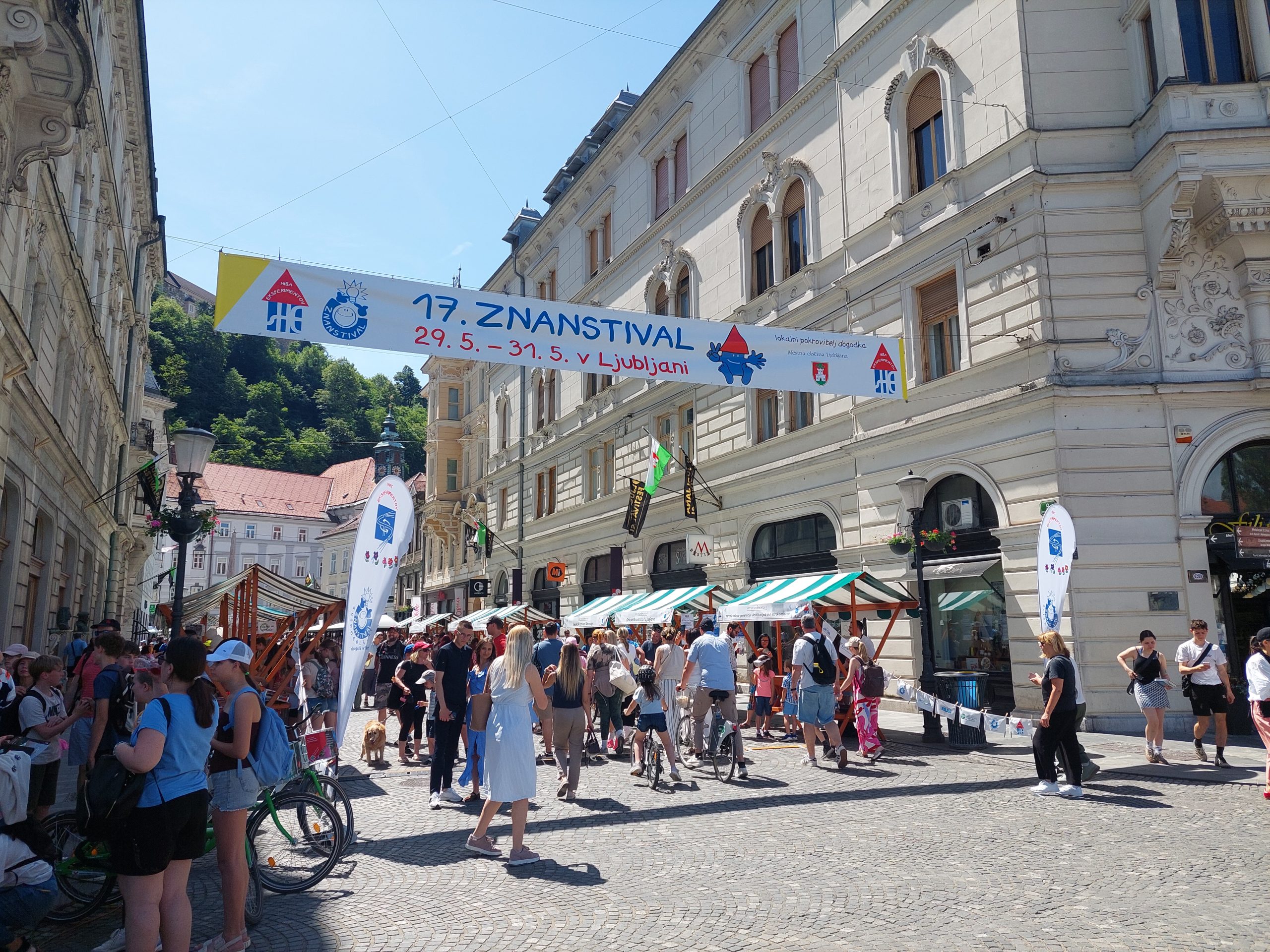
A different communication approach emerged in Selnica ob Dravi during Slovenia’s Znanstival science festival, where approximately 450 visitors engaged with MOUNTADAPT activities.
Here, the focus was on making environmental and health risks visible through technology and observation.
The site’s VECTRACK pilot solution, a smart mosquito monitoring system, became a central conversation starter. Visitors compared traditional mosquito traps with sensor-based monitoring systems and observed mosquito specimens and larvae under microscopes.
What could otherwise remain an invisible future risk became something tangible and immediate.
Alongside technology demonstrations, the event also connected research directly with practical action. Information on heat stress and safe physical activity during hot weather was shared through discussions and awareness materials, marking the launch of the site’s first public awareness campaign.
The approach demonstrated another important principle: people are more likely to engage when scientific information is paired with practical guidance they can apply in their daily lives.
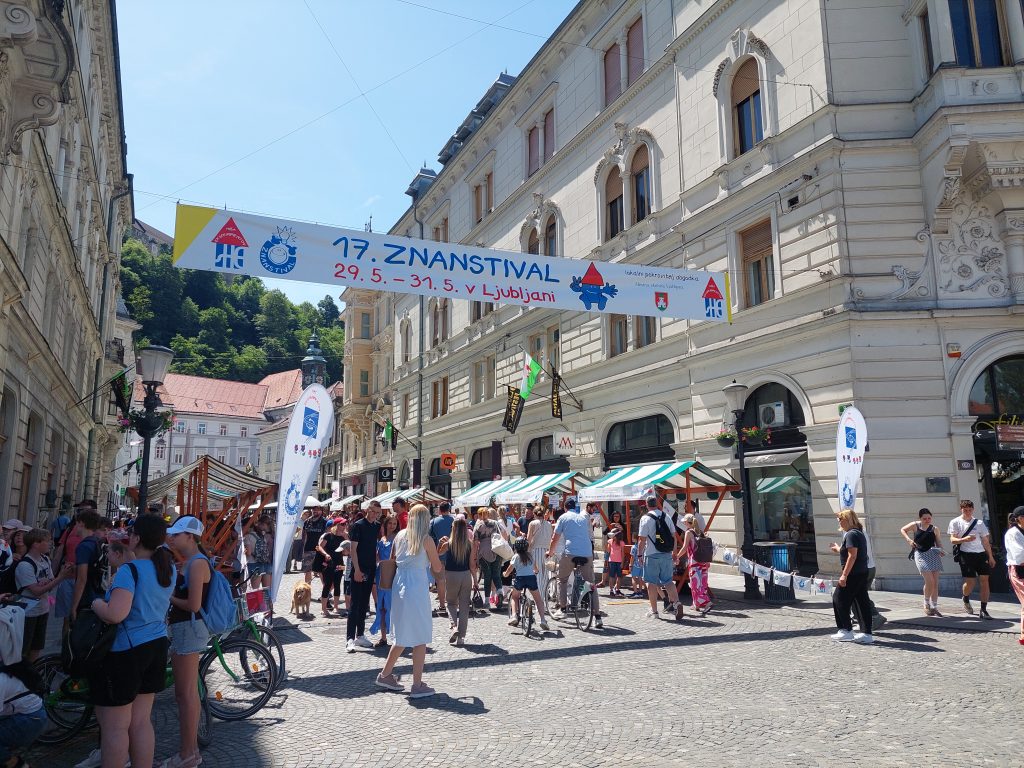
Photo credits: Branka Mirt, ENERGAP
Beyond dissemination: science communication as mobilisation
Although the two demonstration sites used different methods, both were exploring similar questions:
- How do we move from informing people to involving them?
- How do we transform scientific knowledge into something communities can act upon?
- How do we create dialogue rather than one-way communication?
The experiences suggest that effective climate-health communication relies less on simply presenting information and more on creating participation. Interactive activities, practical demonstrations, personal relevance, and opportunities for conversation all appear to strengthen engagement.
For MOUNTADAPT, Open Field Days are about helping identify approaches that can support broader societal preparedness and resilience.
As climate-related health risks continue to emerge across mountain regions, and all of Europe, effective adaptation will depend not only on scientific evidence itself, but also on how successfully that evidence reaches and mobilises people.


