






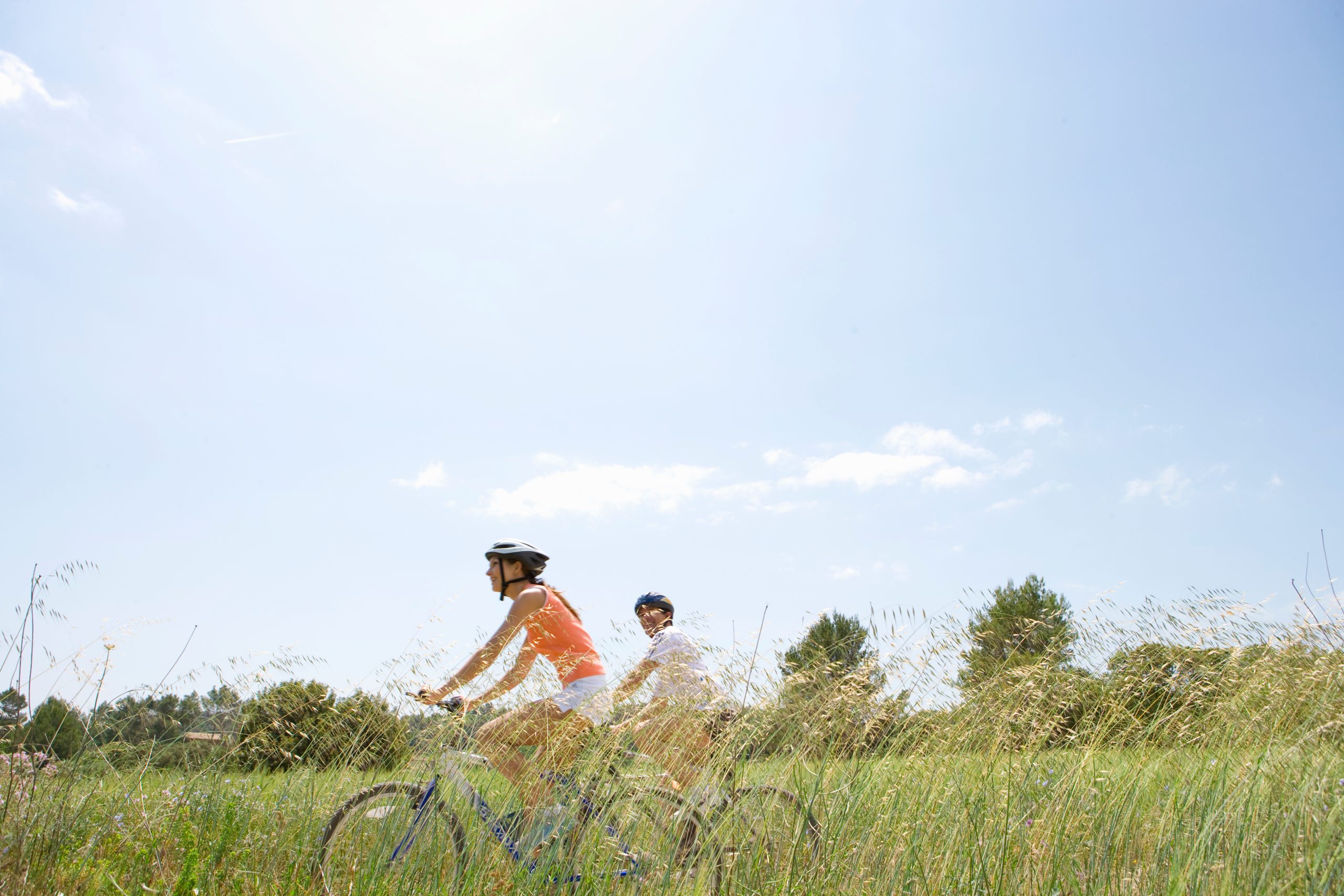
Rising temperatures caused by climate change and urban pollution are creating ‘environmental stressors’ for all kinds of cyclists, including professional athletes and everyday commuters. However, cycling is a vital form of physical activity and transport for many people across Europe, contributing to well-being and helping to mitigate climate change. In this context, urban cyclists may face increased exposure as climate change increasingly affects cities and urban areas in Europe. In this context, access to evidence-based information that helps cyclists understand how to appropriately adapt their physical activity practices remains limited.
MOUNTADAPT aims to provide concrete adaptation solutions, whether through innovative tools and technologies (such as the VECTRACK system and SENTINEL) or through capacity-building initiatives (e.g., the Awareness Raising Campaign Toolkit). The project also seeks to provide first-hand information to the general public through initiatives such as the public engagement labs held in Slovenia and Austria.
The Physical Activity Recommendation Guide (PAR) (p.68), developed by project partners UGA, TIMC, and FLORALIS, is part of this effort. For everyday and occasional cyclists, the guide provides evidence-based, practical recommendations to help them maintain and adapt their cycling practices in urban environments under changing climatic conditions.
1. Cycling in a changing climate: Powerful for health and the climate, but also exposed to stressors
Cycling is a popular sport and leisure activity and is increasingly used as a means of transport in everyday life, particularly for commuting to work and accessing daily services and activities. The growing adoption of cycling in urban areas reflects broader efforts to promote sustainable mobility and reduce dependence on motorised transport.
Cyclists value this mode of travel not only because it is affordable, efficient, and often faster than other forms of transport in congested urban environments, but also because it provides regular physical activity. Cycling contributes to improved physical and mental well-being.
However, while cycling is beneficial for health and is an environmentally sustainable form of mobility, cyclists are often exposed to environmental stressors. Climate change is creating new challenges for cyclists, particularly in urban areas, which are often more vulnerable to its effects due to phenomena such as the Urban Heat Island (UHI) effect.
“One of the key challenges is balancing the undeniable health benefits of cycling with increasing environmental stressors such as heat and air pollution. The goal is not to discourage cycling during periods of environmental stress, but to help people remain active while adapting their practices to changing environmental conditions.” – Prof. Jean Luc Bosson (Public Health, University Grenoble Alps)
The environmental stressors that cyclists face stem from:
- Air pollution
- Heat exposure and thermal stress (including solar radiation)
- Physical exertion and individual physiological capacity
The adaptation challenge: Supporting people to keep cycling in a changing climate
As cities adapt to changing climatic conditions, it is important to understand and manage the balance between the health benefits of physical activity and the potential risks associated with environmental stressors.
This does not mean that cyclists and commuters should abandon cycling as a means of transport. The health benefits of regular physical activity are substantial, and cycling for transport is an important way to reduce greenhouse gas emissions. The challenge lies in adapting cycling behaviours and practices to counterbalance the effects of environmental stressors.
2. An Evidence-Based and Practical Guide
The Physical Activity Recommendations (PARs) are a series of science-based recommendations developed within the MOUNTADAPT project to support this adaptation process for recreational and elite cyclists, as well as commuters. Grounded in scientific research and real-world observations, the PARs improve our understanding of cyclists’ exposure to environmental stressors by drawing on field data collected using instrumented bicycles equipped with environmental and physiological sensors. These measurements enable the assessment of cyclists’ exposure to environmental stressors.
In addition, the PARs build on a comprehensive review of the existing scientific literature on environmental health, physical activity, urban mobility, and climate change adaptation, helping to ensure that the guidance reflects the current state of knowledge in these fields.
The development of the recommendations followed a structured methodological approach combining a review of the scientific literature on physical activity, environmental exposure and health outcomes, field data collected within the PAR project, and expert interpretation of the available evidence. To facilitate interpretation and implementation, each recommendation was assigned a level of evidence based on the overall body of available evidence rather than simply on the number of individual publications. The assessment considered the methodological quality of the available studies, the consistency of findings across studies, the directness and applicability of the evidence to the target population and cycling context, and the precision and robustness of the available evidence.
Recommendations were classified into three levels: Grade A (strong evidence) indicates recommendations supported by robust, consistent and directly relevant scientific evidence, with no major limitations likely to substantially affect confidence in the conclusion; Grade B (moderate evidence) indicates recommendations supported by generally consistent scientific evidence, but with some limitations regarding methodological quality, directness, consistency, precision, or applicability to the target population; and Grade C (limited evidence) indicates recommendations for which the available evidence is limited, indirect, inconsistent, or associated with substantial uncertainty, and which may therefore rely partly on extrapolation from related evidence or expert interpretation and require further research.
This grading system reflects the strength of the available evidence, rather than the magnitude of the effect, and helps users understand the relative robustness of each recommendation and prioritise their actions.
“Our recommendations are based not only on the scientific literature, but also on concrete measurements collected during cycling activities. Our team is currently developing and testing monitoring approaches based on instrumented bicycles to better understand cyclists’ exposure to heat and air pollution.” – Sebastien Letout (Research Engineer at University Grenoble Alps)
3. Recommendations for Adapting Practices and Behaviours
The PARs highlight recommendations that can significantly help preserve the benefits of everyday cycling in urban areas. These include:
- Maintaining regular physical activity to support cardiovascular resilience, as regular activity can help prepare the body for hot conditions.
- Adapting routes by prioritising greener routes away from major emission sources, using dedicated and separated cycling infrastructure, and avoiding narrow and confined streets.
- Adapting timing by avoiding peak traffic hours and adjusting intensity or duration according to weather conditions.
- Adapting behaviour by avoiding direct proximity to vehicle exhaust plumes, positioning away from traffic at traffic lights, maintaining a steady and smooth pace, and avoiding frequent stops.
- Adapting intensity by favouring moderate-intensity cycling and avoiding intense efforts in highly polluted areas.
- Maintaining a balanced diet rich in antioxidants and staying well hydrated.
There are, of course, some limitations. Environmental conditions can vary considerably across locations, seasons, and urban settings, influencing cyclists’ exposure to heat and air pollution. Likewise, individual responses to these environmental stressors may vary with factors such as age, fitness level, health status, acclimatization, and cycling intensity. As a result, the recommendations should be viewed as general guidance that may need to be adapted to individual circumstances.
Explore the full PARs to understand how each action can help keep you safe while cycling.
4. Testing the PARs across Europe’s mountain regions
Download the complete guide for a more detailed description of the evidence, methodology, and recommended practices (these recommendations start at page 68).
The PARs are currently being implemented and tested across several MOUNTADAPT demonstration sites in Slovenia, Austria, and France. This process will include disseminating the recommendations through local mobility networks, integrating them into cycling promotion programmes, and conducting targeted awareness-raising campaigns aimed at active mobility users to help them learn how to continue cycling safely year-round.
Over the coming months, the impact and usability of the recommendations will be assessed through a range of monitoring and evaluation tools. The insights gathered from these activities will support the continuous refinement of the recommendations, ensuring that they remain relevant, evidence-based, and responsive to the needs of cyclists facing the growing challenges of climate change.
As MOUNTADAPT partner and PARs developer Amel Khellaf, European Health Project Manager, put it, “Climate adaptation also means helping people stay physically active safely under changing environmental conditions.”


